Every day I open my social media, I see some weird videos of a cat attacking a human or an influencer trying to sell me yet another product I don’t need. But in both these videos, I see something off—an element that makes me think, “It’s not real.” The sad part is that I don’t know if they are real. And there is no way to find out. Or is there?
When I first learned about Artificial Intelligence (AI), I thought of robots solving complex human problems. But now, things have changed; that definition of AI no longer applies. AI is at our fingertips, on our devices, and in the content we consume every day.
AI has impacted our daily lives in many ways — from writing better content to generating art in seconds to composing music, scripts, and business ideas, and more. There is really no limit to the abilities of AI.
After seeing all that AI can do, the unsettling thought remains: What happens when machines can out-create us?
With the presence of AI, human creativity has definitely felt the impact. AI is more creative in terms of speed, volume, and technicality. For instance, AI can generate content in seconds, whereas humans struggle for hours to do the same work.
AI gives you endless ideas with a few lines of instructions and a click of a button. It can provide you with infinite variations, just as you want. It can give you a polished structure and recognize patterns at scale.
In terms of these factors, AI has definitely surpassed human capabilities. But the question remains: Is creativity just about speed and volume?
The answer is no.
I can see that humans are beginning to fear AI. The rapid growth of technology has fearfully impacted our psychology.
Let’s talk about the fear of irrelevance. Have you ever questioned yourself this: “If AI can do it better, what’s the point of me?” I often ask myself this question, and every time I think about it, I get scared. Will I eventually lose my worth if AI becomes more advanced (which it will)?
Humans also fear losing their identity to AI. Many creatives define themselves by their output — the work they produce. But if that output is automated, who are we?
Then, there is the fear of economic displacement. What is going to happen to our jobs? Will AI take over us? How will we compete with AI? With most industries seeking human replacements through AI, there is definitely something to fear about. Some studies predict that up to 300 million jobs could be affected or replaced by 2030.
AI can do many things faster and more reliably. That’s an undeniable truth. For instance, AI is good at pattern recognition, optimization, systems of existing information, and generating variations. Human capabilities are nowhere near that of AI in these matters.
However, no matter how advanced the technologies get. There are many things it can’t do that we can. For instance, AI doesn’t have lived experience, mortality, emotional memory, personal stakes, conscious suffering, meaning, etc.
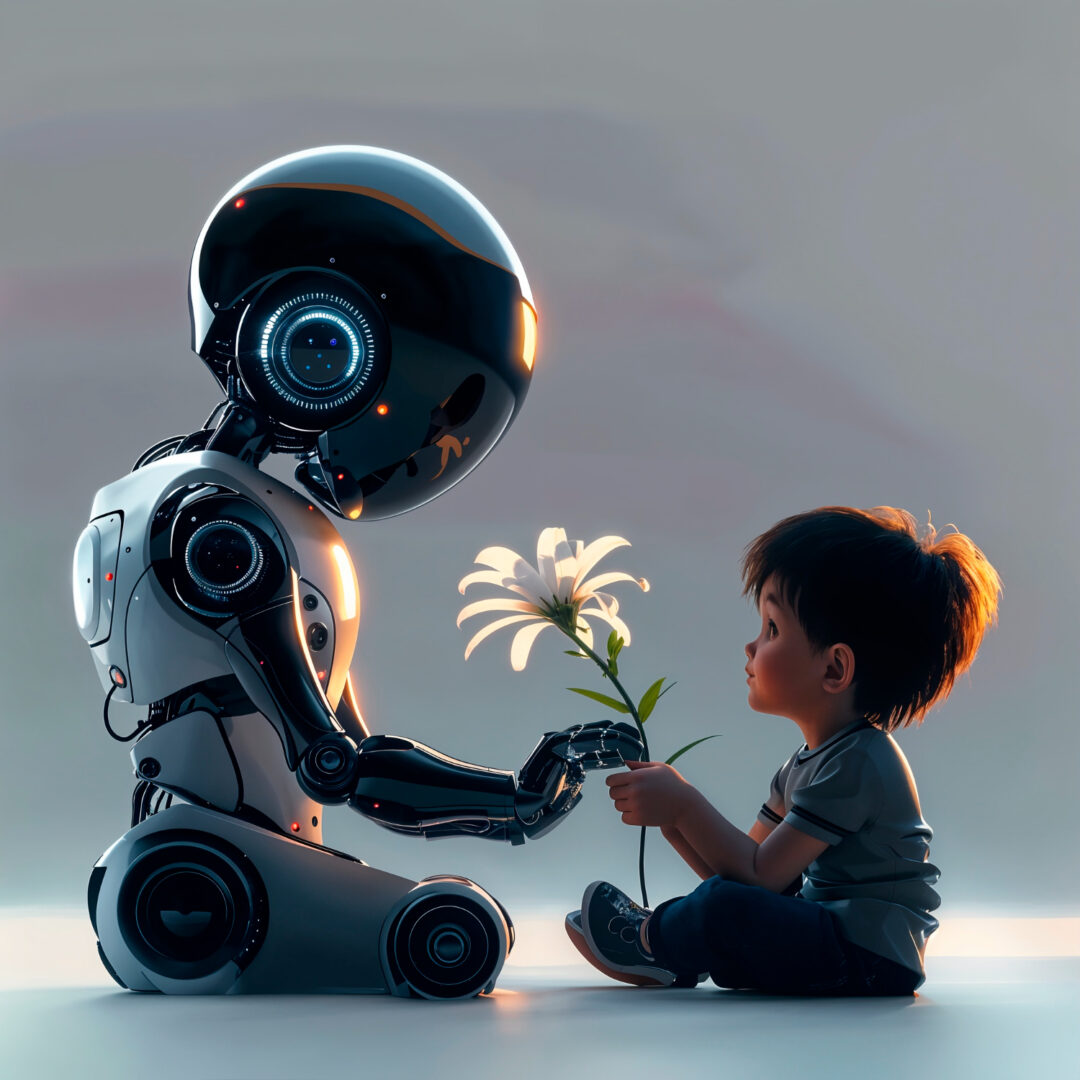
Machines are not humans. And that fact will always be true. AI can generate, but humans can experience. AI can create content; humans express consciousness. AI combines patterns; humans translate experience.
For example, AI can write about heartbreak, but it has never felt it. No matter how many times you instruct it to “sound human,” it will only give you a machine answer. It cannot feel what it feels like to lose someone you love.
Humans still have the upper hand — some things they don’t need to fear from AI. We can assign value and show human care. We can interpret things in our own way.
Humans have taste. We can curate things and give them meaning. We know what to amplify and what matters. AI cannot have a personal narrative even if it tries to sound human. Humans can have unique worldviews and cultural contexts.
Humans are responsible. We have ethical judgment, emotional sensitivity, and social awareness. AI only does what it learns. We understand people and build real connections. We can socialize and interact authentically with other humans. We can build a community that shares similar goals and values, unlike AI.
The Shift from Creation to Direction
AI will make everything for you if you say so. But that’s where we humans need to be careful. If you fear AI replacing you, why would you instruct it to do everything for you? Ironically, that’s what’s happening around the world.
Don’t ask AI to create everything for you. That’s where your creativity will lose its potential. And you are allowing it to happen.
Instead of treating AI as the “maker of everything,” use it as your editor, curator, director, visionary, and integrator. AI becomes a tool, an amplifier, and a collaborator. Humans remain the decision-makers and most importantly, the meaning-makers.
We have an advantage. We have emotional depth, courage, vulnerability, lived truth, and moral clarity. In an age of AI, authenticity becomes rare intelligence. If everyone is using AI, you can be different and share your own truth with the world by yourself, using the powers you have as a real human being.
Answer this: “Why do you create?” Is it to outperform machines or to understand yourself and your abilities?
Creation is exploration. It’s healing and connection. It’s about building a legacy. Your work is unique to you because you made it. Nobody — not AI, not another human — can replace what you can do uniquely.
That’s your advantage. AI may outperform you technically. But you create existentially.
Let’s dive into the future. AI is becoming increasingly advanced. What’s the future going to be like?
AI will handle most of the repetitive work; that’s for sure. It will increase automation of tasks—tasks that humans take hours to finish. It will create content for you more effectively. But there will still be a role for humans. We can focus on vision. We can direct AI and show the path. We can become the differentiator and provide depth.
So the question remains: When AI becomes more creative than us, what’s left for humans?
The answer: A lot of things — meaning, choice, story, responsibility, courage, soul, and many more.
AI may master patterns, but only humans live the story.
Hi, I’m Biliz.
If this piece resonated with you, feel free to leave a few claps and follow for more. You can also buy me a coffee.
Download my free blueprint to grow your audience from zero to 1,000.
Your support truly means a lot. It helps me keep creating and sharing meaningful work. Thanks for being part of this journey.